
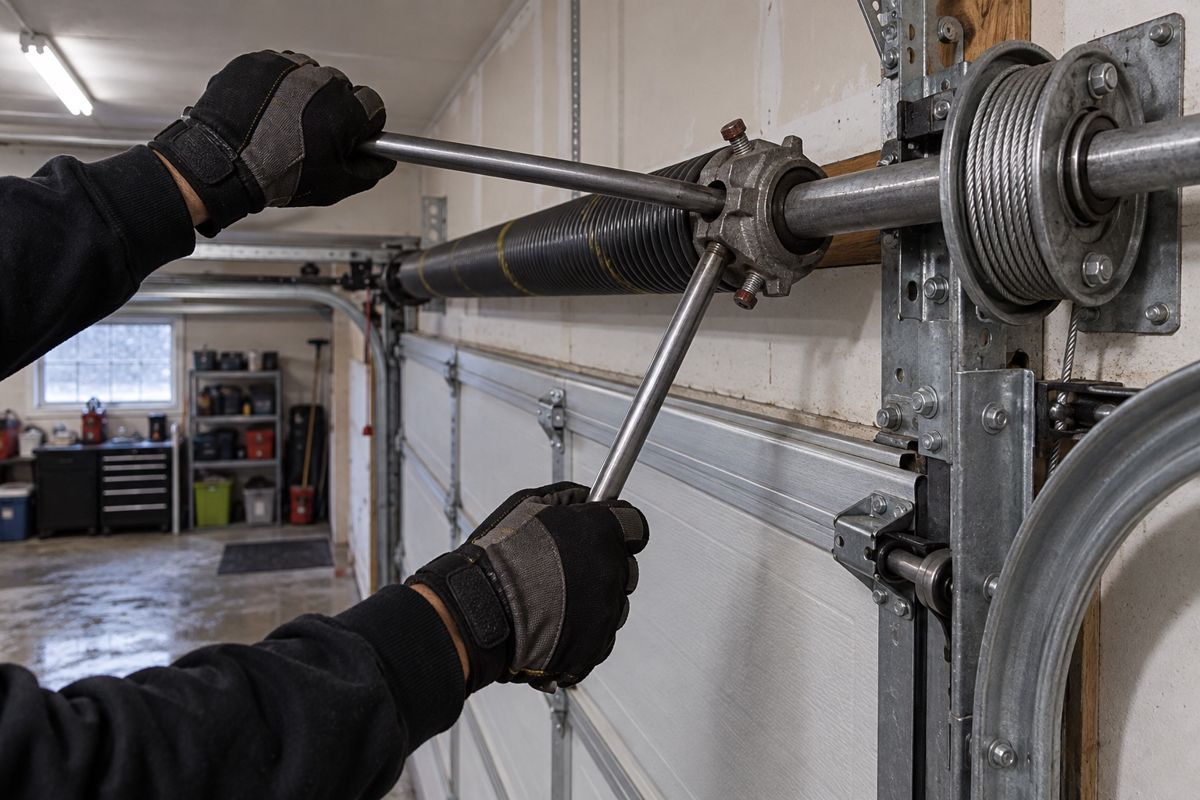
Torsion or extension: which spring does my garage have?
Torsion springs sit on a steel shaft above the opening. Extension springs run along both sides of the horizontal tracks. Many older detached garages on Chicago's bungalow blocks still use extension springs, a setup common with lighter wood doors. Newer steel and insulated doors, and most suburban attached garages, tend to use torsion springs.
Both types hold a large amount of stored force. That is why spring work belongs with trained hands and proper winding bars. A slipped bar or a spring that lets go can cause serious injury. We will not give you do-it-yourself steps, and the videos online tend to skip the dangerous parts.
Extension setups also need safety cables running through the springs. Without them, a spring that breaks on an old door can whip across the garage. A careful technician checks for these and recommends adding them where they are missing. If the door has other worn parts, the same visit can cover cables and tracks too.