
Skip to content

Written quotesLocal technicians

Openers in Chicago, IL

Garage door opener repair in Chicago

From a motor that hums and will not lift to a new smart opener for a detached garage, with plain advice on repair or replace.

(312) 555-0129 Call for garage door help
  • Chain, belt and smart openers
  • Remotes and keypads reprogrammed
  • Safety reversal tested after the work
Get my free garage door quote

Step 1 of 3

What do you need?

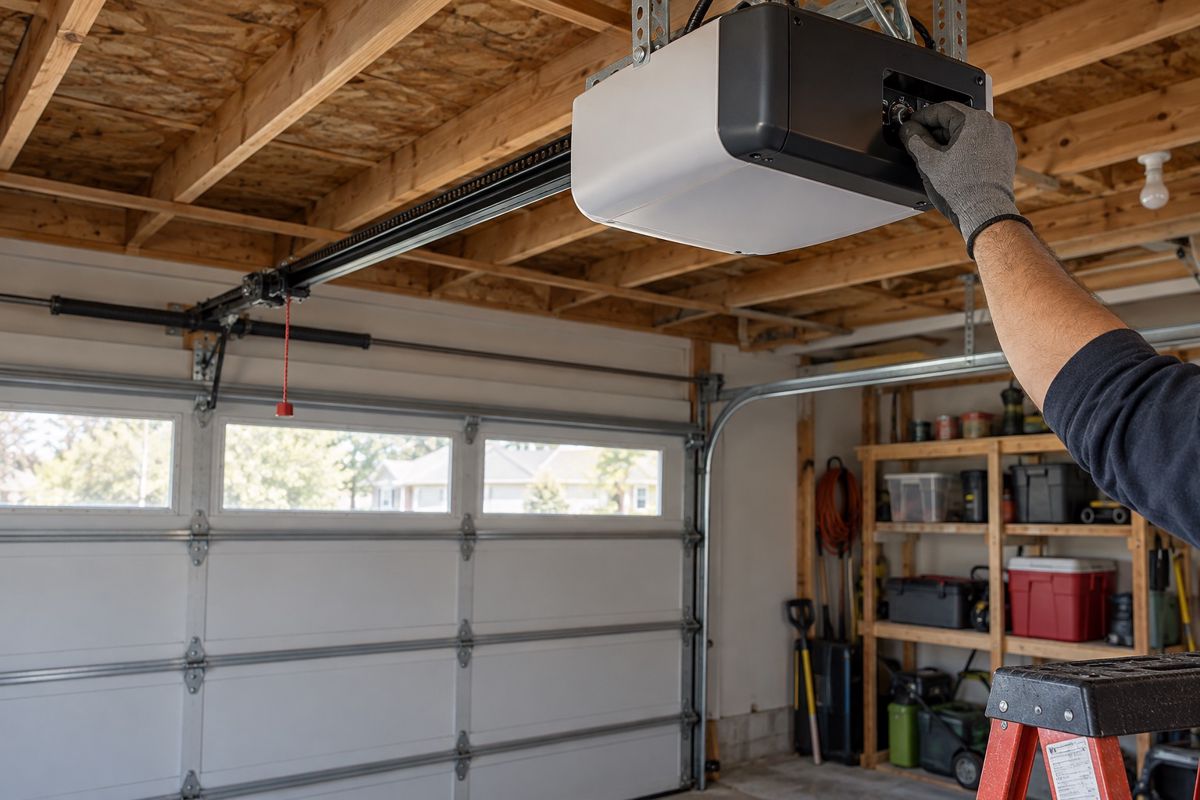
Technician adjusting a ceiling-mounted garage door opener from a stepladder

Why will my garage door opener not work?

Most opener problems come from a short list of causes. A few of them are quick to check safely before you call.

  • Remote or wall button: weak batteries are the most common cause. If the wall button works and the remote does not, start there.
  • Photo eyes: the two small sensors near the floor must see each other. Frost, snow, dirt or a bumped bracket can break the beam, and the door will refuse to close.
  • Power: check that the opener is plugged in and that the garage outlet has not tripped. Cold and damp can trip these outlets.
  • Travel limits and force settings: these can drift, so the door stops early or reverses.
  • Worn parts: a stripped drive gear, a failed circuit board or a tired motor.

If the motor hums but the door barely moves, the cause is often a broken spring, not the opener. In that case do not keep pressing the button, and read about spring repair.

Chain, belt, screw or direct drive: which suits a Chicago garage?

The drive type changes noise, upkeep and how the opener copes with winter.

Chain drive

Common, sturdy and usually the least costly. It is louder, which matters if a bedroom sits above or beside the garage, as in many attached suburban garages and some two-flats.

Belt drive

Much quieter, a good match for a living space close to the door. In very hard cold, a belt can feel stiffer for the first cycle, though a healthy one works fine.

Screw drive

Fewer moving parts, but it needs regular lubrication and can be fussier in big temperature swings.

Wall-mount or direct drive

The motor sits beside the door, which frees ceiling space and suits garages with low headroom or storage racks overhead. It also tends to be quiet.

Ask your technician which fits your door weight and ceiling, since a heavy insulated door asks more from the motor than a light single.

Are smart openers worth it for an alley or detached garage?

For many Chicago owners, yes, with a few cautions. A smart opener connects to your Wi-Fi so you can see on your phone whether the door is open, close it from the train and let a delivery or family member in without a spare remote. Detached alley garages benefit most, because you cannot see the door from the kitchen window.

Points to weigh before you buy:

  • Wi-Fi must reach the garage. A detached garage across the yard may need an extender or a mesh node.
  • A battery backup keeps the opener working during a storm outage.
  • A keypad on the outside is handy when someone forgets the remote.
  • Not every smart feature works with every phone or home system, so check compatibility.

Modern openers sold in the United States are built with safety reversing features, but they only protect you when they are installed and tested properly. That is part of every installation we do.

We quote in writing after seeing the door, because the opener is only half the story. Factors that change the price:

  • Repair or replace. A sensor, a gear kit or a board can be fixed. An older motor that has failed more than once usually is not worth repeating.
  • Drive type and motor strength, which should match the door weight.
  • Rail length and whether the ceiling or header needs extra bracing.
  • Wiring, a new outlet or power in a detached garage.
  • Extras such as battery backup, Wi-Fi, cameras, keypads and extra remotes.

A fair quote should also check the door itself. An opener cannot make up for a door that is out of balance. If the door is the real problem, a conversation about a new garage door may save money over a new opener on an old door.

What happens on the day and when should I call?

A visit starts with a balance test, because a door that does not stay halfway up will wear out any opener. Then the technician checks the sensors, wiring, limits, force and safety reversal. If a new opener goes in, the rail is mounted, the bracket is fixed to the door and remotes and keypads are programmed. Many installs fit into a single visit, and a repair is often quicker, though extra door work adds time.

Call when the door reverses for no reason, grinds, closes only with the button held, loses remote range or shows only the work light. Call (312) 555-0129 or use the form, and see our Chicago garage door repair page for the other jobs we handle.

Request garage door openers

Tell us what you need and we call you back.

No obligation.

Step 1 of 3

What do you need?

Questions about garage doors in Chicago

Why does my opener work in summer but struggle in winter?

Cold thickens grease, stiffens belts and seals, and can freeze the bottom seal to the slab. The opener then pushes against more resistance, and settings that worked in July may not in January. Cleaning and lubricating the door, replacing a hardened seal and adjusting the force limits often helps.

Why does my garage door reverse before it closes?

The usual causes are misaligned or dirty photo eyes, a seal that drags on an uneven floor, or force and limit settings that have drifted. Reversing is a safety feature, so it should never be turned off. A technician can find the cause and set the opener so it closes fully and still reverses when it should.

Can you reprogram remotes and keypads?

Yes, remotes and keypads are programmed as part of an opener repair or installation. If you have lost a remote, or the old one stops responding after a power cut, mention it when you call. Remotes from different brands are not always compatible, so we check what suits your opener.

How long does a garage door opener last?

There is no fixed number. Many openers run for well over a decade, but heavy use, a poorly balanced door and cold damp conditions shorten that. An opener that is loud, jerky, slow or repaired often is nearing the end. Your technician can tell you whether repair or replacement makes more sense.

Does a new opener fix a door that is hard to lift?

No. If the door is heavy by hand, the springs, cables or balance are the cause, and a new opener on top will wear out quickly. Fix the door first. After that, the opener should be sized to the door and set up with the correct limits and force.

What you can expect

  1. Written quotes

  2. Local technicians

  3. Fast response

  4. Parts that fit your door

Ready when you are

Call now or request a quote online.

(312) 555-0129

How it works

  1. Call or request a quote

    Tell us what the door is doing.

  2. Clear price

    We diagnose and quote before any work.

  3. Fixed or fitted

    Repaired or replaced and tested for safety.