
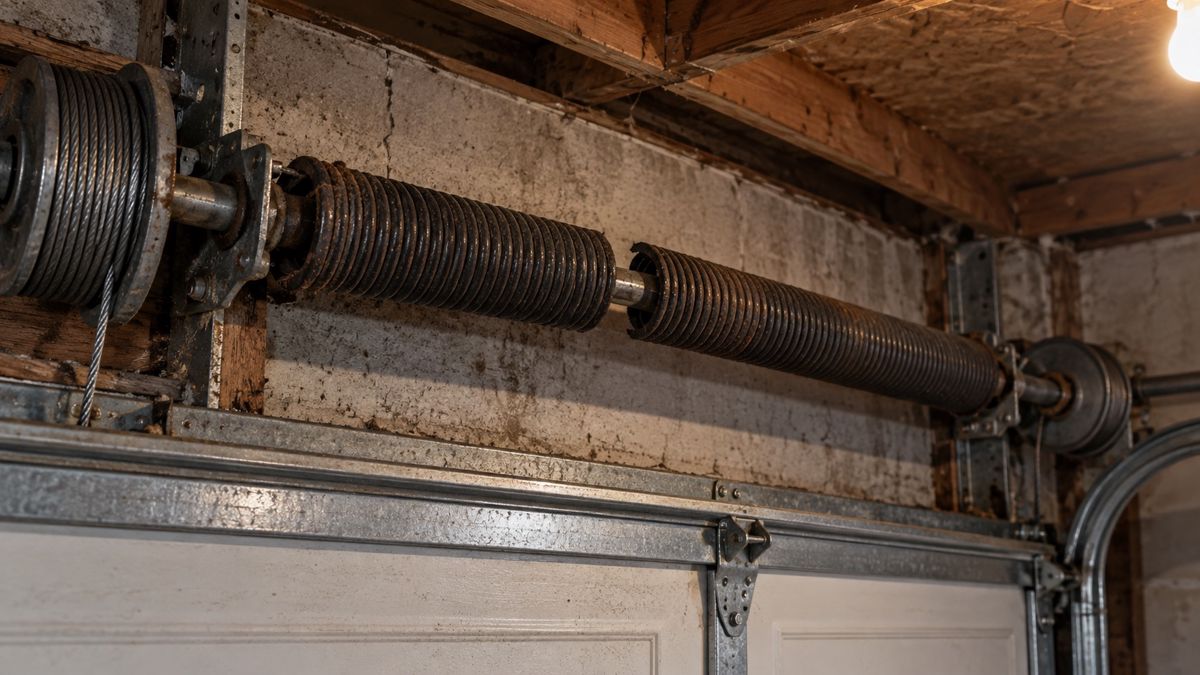
Do not replace a garage door spring yourself. The spring holds a large amount of stored force, the tools are specialized and a single slip can send a steel bar through the air. A trained technician does this job every week and knows the warning signs. For a homeowner it is a one-time risk with a very bad downside.
This guide explains what is inside the spring, what goes wrong when people try, why a Chicago winter makes everything harder and what you can safely do while you wait for help.
How much force is inside a garage door spring?
A garage door is heavy. A double steel door with insulation can weigh well over a hundred pounds, and a wood door can weigh more. You can lift a door with the opener or by hand only because the springs carry most of that weight. They do it by being twisted (torsion springs) or stretched (extension springs) far beyond their relaxed state.
That stored force is the whole point, and it is also the danger. When a spring is wound, the energy is held back by a steel shaft and a pair of set screws. If anything slips, breaks or is loosened in the wrong order, the energy comes out all at once.
Think of a tightly twisted rubber band the size of your forearm, made of hardened steel. You would not cut it with your face a few inches away. A garage door spring is a bigger version of that.
What actually goes wrong when people try it?
The common accidents are not mysterious. They come from the same few mistakes.
- Winding bars that slip. Torsion springs are wound with two steel bars inserted into holes in the winding cone. A bar that is the wrong size, or a hand that lets go at the wrong moment, can spin the bar free and strike the person or the door.
- The wrong replacement spring. Springs are matched to the weight and height of the door. One that is too weak leaves the door heavy. One that is too strong can make the door fly up and put a strain on the opener and cables.
- A spring that was already cracked. A coil with a hidden crack can fail while it is being wound.
- Loosening set screws too early. If the cone is not secured, the shaft can spin and release the tension.
- Working under a door that is not secured. A door with a failed spring can drop with no warning.
Online videos make the job look like a calm hour in the garage. They tend to skip the moments where the work goes wrong, and they do not show the injuries. They also cannot tell you whether your particular spring is the right size for your particular door.
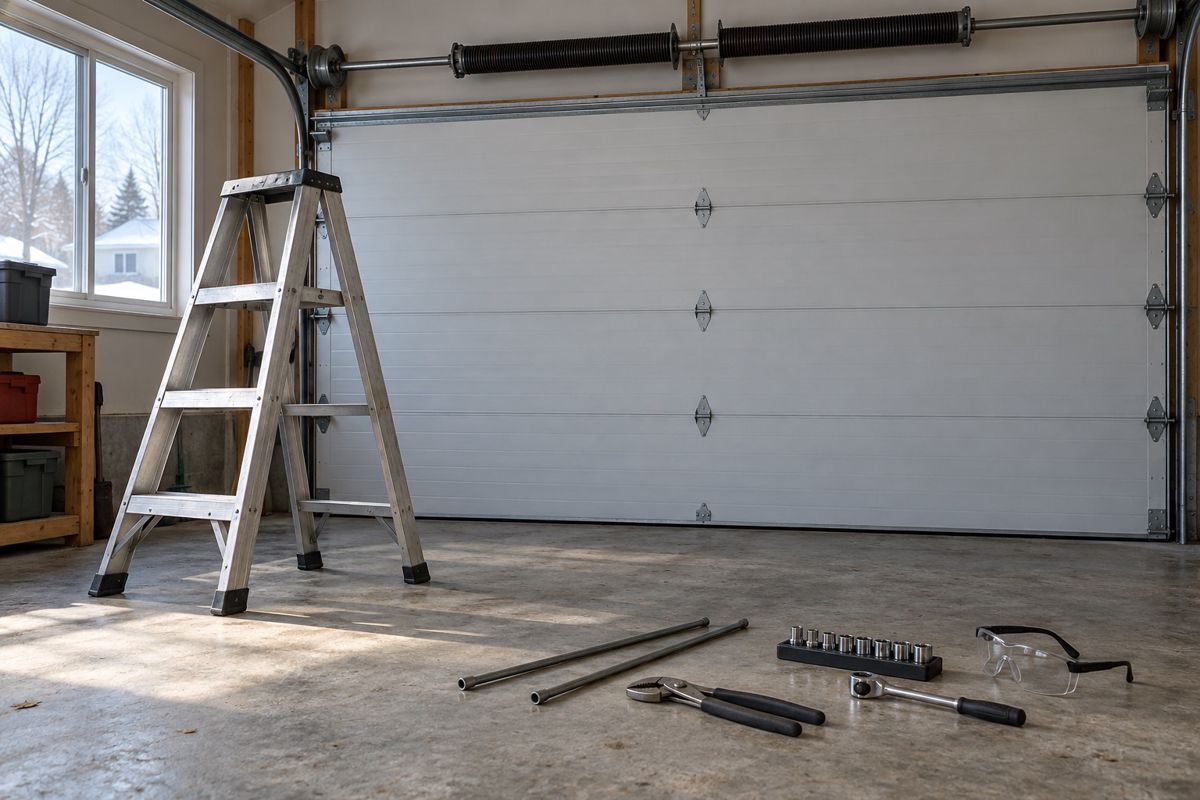
Why is it even riskier in a Chicago winter?
Cold turns small problems into bigger ones. Lubricant thickens, so parts that normally slide are stiff. Metal contracts, which can tighten fittings and make set screws harder to move. Gloves reduce grip and feel, and a numb hand is a slower hand, which is a poor match for a tool that can bite.
Salt and rust are the other local factor. Garages in the city collect salt from tires all winter, and it settles on coils, cables, brackets and bolts. Rust can freeze a fitting solid or hide a weak spot in a spring. Detached alley garages are often older and may have extension springs with safety cables that are missing, frayed or rusted away. If an old spring snaps without a safety cable, it can whip across the garage.
An uninsulated garage on a January night is also a bad place to concentrate on delicate, risky work with poor light and numb fingers.
What can you safely do yourself?
There are useful things you can do that do not involve the spring or cables at all.
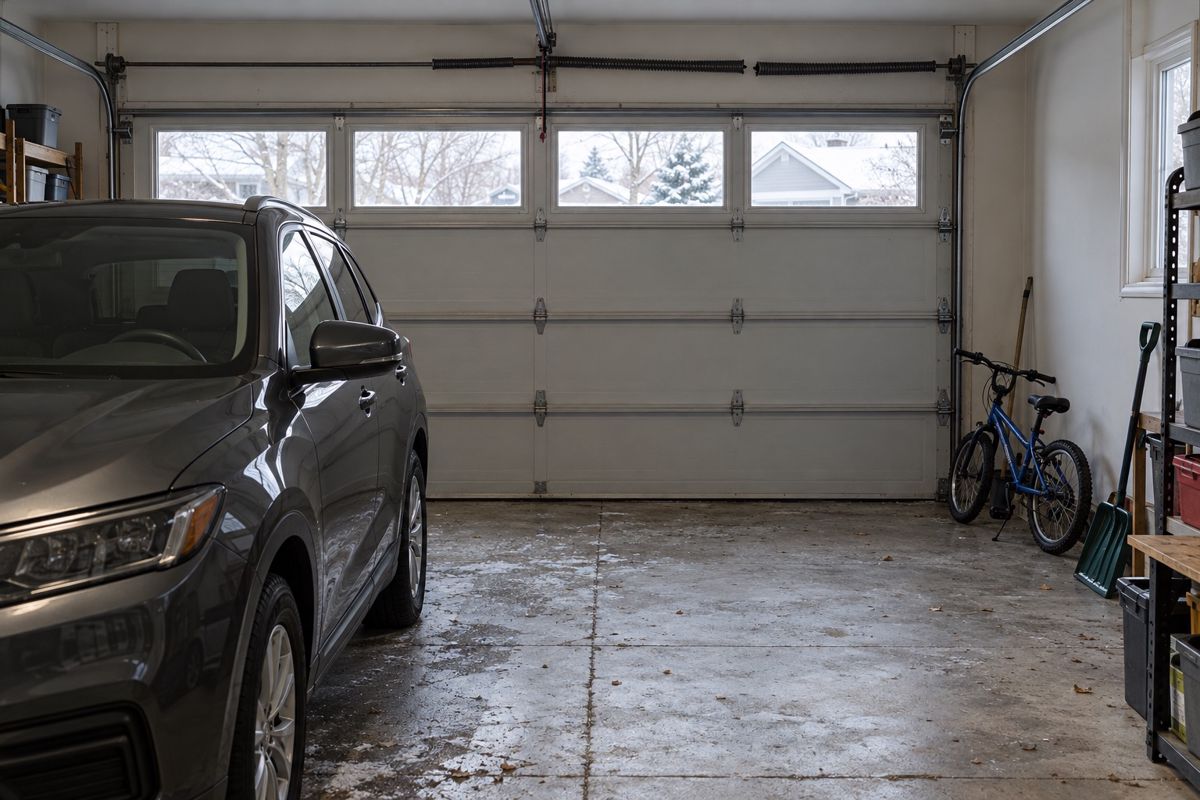
- Look from a safe distance. From the floor, check for a visible gap in the coil above the door or a spring that looks stretched or snapped. Take a photo to show the technician.
- Keep the area clear. Keep kids, pets and vehicles away from the door. A door with a broken spring can fall.
- Do not use the opener. The opener is not built to lift the full weight of the door, and running it can burn out the motor or strip the gear.
- Leave the release cord alone unless a technician tells you what to do. Releasing the door can drop it.
- Note what you heard. A loud bang followed by a heavy door is a classic sign of a broken spring.
Outside of a failure, you can do light upkeep such as wiping the tracks, checking that the photo eyes are clear of frost and testing the auto-reverse. Leave anything that involves springs, cables or the brackets at the bottom corners to a pro.
What does a professional replacement involve and what affects the price?
A technician starts by identifying the spring type and measuring the wire size, the coil length and the inside diameter. They check the weight of the door, because the right spring is matched to it. The door is secured, the old spring is removed and the new one is installed and wound using proper bars and the correct number of turns.
After that, they balance the door so that it stays in place halfway up, check the cables, drums and rollers, lubricate the moving parts and test the opener and its safety reversal. Many jobs fit into one visit once the parts are on hand, but a door with other damage takes longer.
Price depends on a handful of things: torsion or extension, one spring or two, the size and weight of the door, the cycle rating of the spring and whether cables, drums or bearings are worn. Ask for a written quote that says what is included. If the door is also rusted, sagging or has had several repairs, it can be worth comparing the cost against a new insulated door.
What should you do right after a spring breaks?
Stay calm and take the safe steps. Stop using the door, keep people and cars clear and do not pull the release cord. If a vehicle is inside, leave the door where it is and make other arrangements for the day, instead of forcing the door to get the car out.
Then call a professional and describe what you saw and heard. Mention the age of the door, whether it has one spring or two and whether anything hit it recently. That helps the technician bring the right parts.
Do not be tempted by a cheap kit and a long video. The money saved is small next to the cost of a hospital visit or a damaged door.
Who should you call for garage door spring repair in Chicago?
If your spring has broken, or you suspect it is about to, get a technician to look at it. Our garage door spring repair page explains what a visit involves and what affects the quote. You can also call (312) 555-0129 or use the form on the site. We will explain what we find, put the price in writing and leave the dangerous part to the people trained for it.